Grinder Materials Compared : Aluminium, Steel, Wood and Acrylic
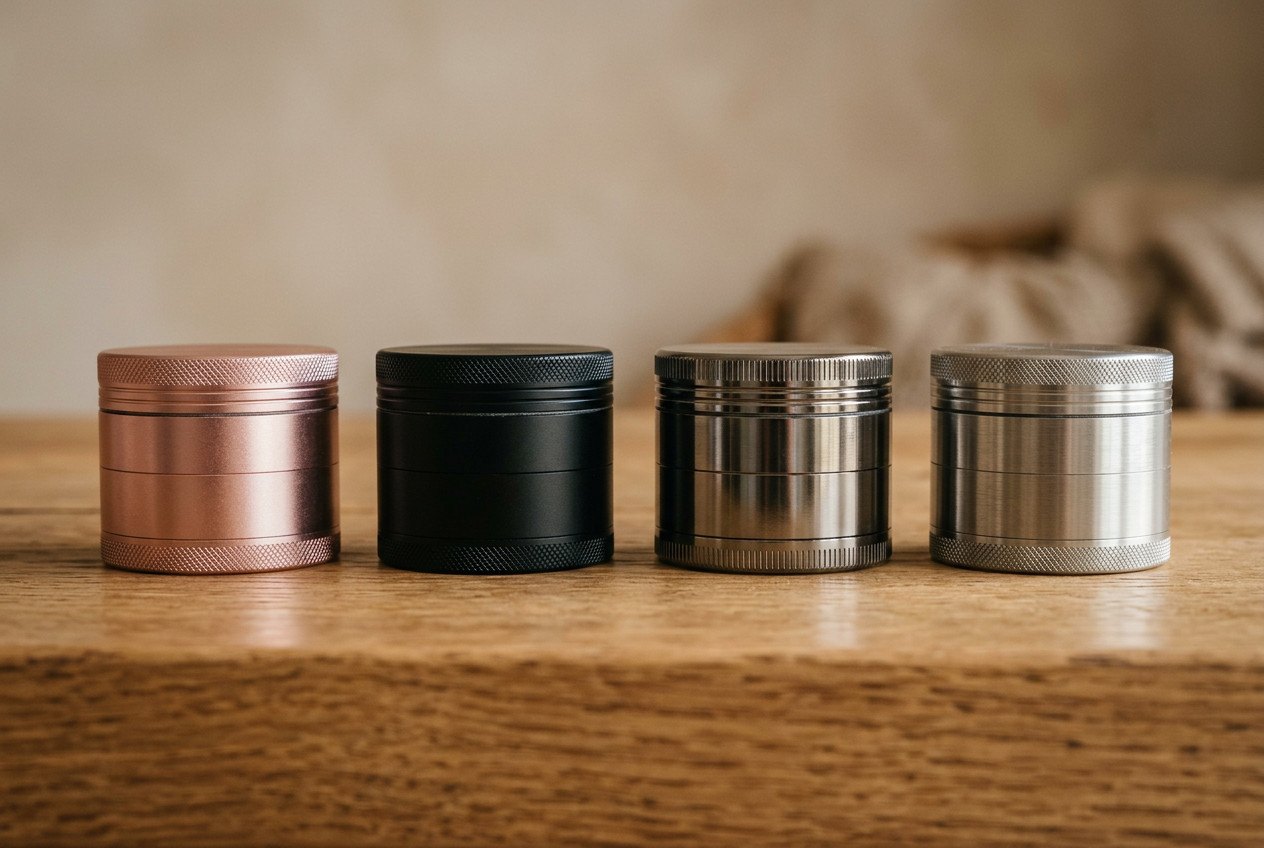
Material is the specification most prominently advertised in this category and the least precisely described. Nearly every aluminium product claims to be 'aircraft grade', a phrase with no regulatory definition, while the properties that actually determine how a piece ages — alloy series, temper and surface treatment — usually go unmentioned.
Aluminium
Most aluminium accessories are made from 6061 or 6063 alloy. 6061 is the stronger of the two and machines cleanly, which is why quality items tend to use it. 6063 extrudes more easily and costs less, but is softer and shows thread wear sooner. Neither is 'aircraft grade' in any meaningful sense — the aerospace alloys are typically 7075 and 2024, which are rarely used here because they cost considerably more and corrode more readily.
What matters far more than alloy choice is anodising. Anodising converts the outer layer into a hard oxide, and its thickness is specified in types. Type II is the common decorative anodising found on most consumer goods; Type III, called hardcoat, is thicker and dramatically more wear-resistant. An item with good Type III anodising will outlast a superior alloy with poor Type II finishing.
Assessing a piece in hand: run a fingernail across the inner surfaces. Quality anodising feels uniformly smooth. If the colour rubs off on a cloth, or the surface feels chalky, the coating is thin and will wear through at the threads within a year.
Stainless steel
Steel is heavier, harder and effectively immune to the thread wear that eventually affects aluminium. The trade-off is weight and cost — a steel item is roughly three times the mass of the aluminium equivalent and typically costs more to machine.
Grade matters here too. 304 stainless is the standard food-contact grade and entirely appropriate. 316 adds molybdenum for better corrosion resistance, which is more than this application requires. Items advertised only as 'stainless steel' without a grade are often 201, a lower-nickel alloy that can develop surface rust in humid storage.
Wood
Wooden items are chosen for appearance rather than performance, and that is a legitimate reason. The practical considerations are that wood cannot be cleaned with solvent without damaging the finish, that it absorbs oils over time, and that humidity changes cause swelling which can bind moving parts. A well-finished hardwood piece kept in stable conditions lasts indefinitely; the same piece in a bathroom does not.
Acrylic and plastic
Acrylic is the budget option and behaves accordingly. It is light and inexpensive, but the material is brittle, threads strip readily, and it is incompatible with isopropyl alcohol — the standard cleaning solvent in this category causes crazing, a network of fine surface cracks. Acrylic items are best treated as short-term purchases rather than long-term hardware.
| Material | Durability | Weight | Cleaning | Relative cost |
|---|---|---|---|---|
| 6061 aluminium, hardcoat | High | Light | Solvent safe | Medium |
| 6063 aluminium, Type II | Medium | Light | Solvent safe | Low |
| 304 stainless steel | Very high | Heavy | Solvent safe | High |
| Hardwood | Medium | Light | Wipe only | Medium |
| Acrylic | Low | Very light | Water only | Very low |
What to prioritise
For everyday use, hardcoat-anodised 6061 aluminium offers the best balance of weight, durability and cost. Steel is the correct choice where weight is irrelevant and permanence matters. Wood is an aesthetic decision made knowingly. Acrylic is defensible only as a temporary or travel item where losing it would not matter.

Dana Whitlock
Dana Whitlock trained in materials science and spent six years in quality inspection for consumer metal goods. She writes about what accessories are made of and how those choices hold up over time.